Recent Posts
Targeted advertising
- laura
- Sep 15, 2017
A friend posted a link in IRC pointing at a couch at Wayfair.com. Now I have Wayfair.com ads following me around the internet.
ProPublica wrote an article about how Facebook lets advertisers micro target “jew haters” and other hate groups.
I received this postcard in the mail. 
Targeted Advertising.
August 2017: The month in email
- laura
- Sep 13, 2017
Hello! Hope all are keeping safe through Harvey, Irma, Katia and the aftermath. I know many people that have been affected and are currently out of their homes. I am proud to see so many of my fellow deliverability folks are helping our displaced colleagues with resources, places to stay and money to replace damaged property.
Here’s a mid-month late wrapup of our August blog posts. Our favorite part of August? The total eclipse, which was absolutely amazing. Let me show you some pictures.



Ok, back to email.
We’re proud of the enormous milestone we marked this month: ten years of near-daily posts to our Word to the Wise blog. Thanks for all of your attention and feedback over the past decade!
In other industry news, I pointed to some interesting findings from the Litmus report on the State of Email Deliverability, which is always a terrific resource.
I also wrote about the evolution of filters at web-based email providers, and noted that Gmail’s different approach may well be because it entered the market later than other providers.
In spam, spoofing, and other abuse-related news, I posted about how easy it is for someone to spoof a sender’s identity, even without any technical hacks. This recent incident with several members of the US presidential administration should remind us all to be more careful with making sure we pay attention to where messages come from. How else can you tell that someone might not be wholly legitimate and above-board? I talked about some of what I look at when I get a call from a prospective customer as well as some of the delightful conversations I’ve had with spammers over the years.
In the security arena, Steve noted the ongoing shift to TLS and Google’s announcement that they will label text and email form fields on pages without TLS as “NOT SECURE”. What is TLS, you ask? Steve answers all your questions in a comprehensive post about Transport Layer Security and Certificate Authority Authorization records.
Also worth reading, and not just for the picture of Paddington Bear: Steve’s extremely detailed post about local-part semantics, the chunk of information before the at sign in an email address. How do you choose your email addresses (assuming they are not assigned to you at work or school…)? An email address is an identity, both culturally and for security purposes.
In subscription best practices — or the lack thereof — Steve talked about what happens when someone doesn’t quite complete a user registration. Should you send them a reminder to finish their registration? Of course! Should you keep sending those reminders for 16 months after they’ve stopped engaging with you? THE SURPRISING ANSWER! (Ok, you know us. It wasn’t that surprising.)
Google Postmaster bad IP reputation
- laura
- Sep 11, 2017
There are widespread reports this morning (9/11/17) that Google postmaster tools is showing bad IP reputation for IPs starting on 9/9. This issue is affecting just about everyone. Looking through my client’s postmaster pages, I’m seeing red for IP reputation on every client. Even my clients with generally good reputation are seeing bad reputation since 9/9. 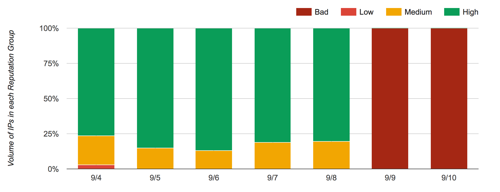 This looks like a reporting or a display error on the part of Google. Many people who are reporting the bad IP reputation are not seeing any significant change in Gmail deliverability.
Looking through client data it appears that domain reputation reporting stopped on 9/8. I am seeing FBL reports for 9/9 and 9/10, for some but not all clients.
My current read on the situation is that something broke internally with the Gmail postmaster reporting. This does not currently appear to be affecting delivery of mail. (If anyone sees differently, drop me an email or tweet me @wise_laura).
I know folks are making sure Google knows. I know that some Gmail folks were directly notified and another Google person is active on Mailop. And we have confirmation that they are aware and are working on fixing it. I will let you know if I hear of a fix timeline.
EDIT: It’s been fixed. Google even fixed the older data. Same client, screenshot from this morning.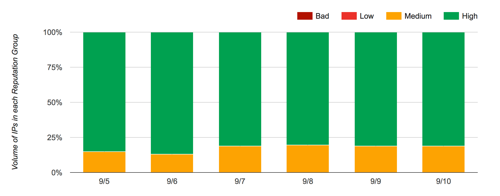

What's going on with your SBL listing?
- laura
- Sep 8, 2017
This popped up on my Facebook memories this morning. I don’t post about client events very often, but given I can’t remember even what client this is, I don’t think I’m revealing too much info.
FB memory from a few years ago.
Equifax compromise and their insecure response
- laura
- Sep 8, 2017
Today it was announced that someone infiltrated Equifax earlier this year and stole 143,000,000 identities. These identities include names, birthdates, and addresses, at a minimum. Details are available at your favorite news site.
What I want to talk about is the website they’ve put up to address the issue. This website is Yet Another Example of how the financial services industry trains users to be phishing victims.
Equifax set up a website for people concerned about the possibility of identity theft after this major data leak. The URL, as distributed by the press and linked to from Equifax’s own website is https://www.equifaxsecurity2017.com.
When I was first sent to the site, I thought it was a phishing site because there is absolutely no way to confirm this site is owned and managed by Equifax. Zero. In fact, there’s a lot of evidence that the site isn’t owned by Equifax. And most of the rest of the evidence relies on trusting that the hackers still don’t have some level of access to Equifax systems.
Who didn't invent email, part 2
- laura
- Sep 7, 2017
Back in 2014, Steve wrote an article discussing Shiva Ayyadurai,and his claims that he was the inventor of email. In that article he links to a number of articles from Techdirt. Earlier this year, Shiva sued Floor64, the parent company of Techdirt, as well as Michael Massnick the Founder, CEO and editor and Leigh Beadon, a writer for Techdirt. (Original Complaint pdf from ReCAP). Ars Technica has a good article on Shiva and his claims.
The complaint asserts that the defendants defamed Shiva in their articles, caused him economic harm and inflicted emotional distress on him.
Today the judge dismissed the case (Memorandum and Order, pdf from ReCAP) against Michael and Leigh. The legal standard for punishable defamatory statements is there must be a way to prove them true or false. The judge ruled that since there is not a single definition of email, that there is no way to definitively prove Techdirt’s statements as true or false.
No one disputes the Shiva coded a system that encompasses the features we expect of any desktop or web based mail client. As many people have mentioned, the fact he was 14 and put together a complex program is impressive in and of itself. No one is disputing what he did accomplish.
To my mind the fundamental core of email is interoperability. It’s that I can sit in my lab at the University of Wisconsin, type a message, hit send and have someone in Boston receive the message. I can sit here in my office in California and write to my client in the the UK. The bits of the email client, which define email according to Shiva, are not email. They’re important for usability, but they’re not what makes email email.
According to Ars Technica, Shiva is going to appeal the dismissal.
EDIT: Techdirt has posted an article on the lawsuit and the dismissal.
Improving Gmail Delivery
- laura
- Sep 6, 2017
Lately I’m hearing a lot of people talk about delivery problems at Gmail. I’ve written quite a bit about Gmail (Another way Gmail is different, Gmail filtering in a nutshell, Poor delivery at Gmail but no where else, Insight into Gmail filtering) over the last year and a half or so. But those articles all focus on different parts of Gmail delivery and it’s probably time for a summary type post.
Spam-infused Mai-Tai
- steve
- Sep 4, 2017
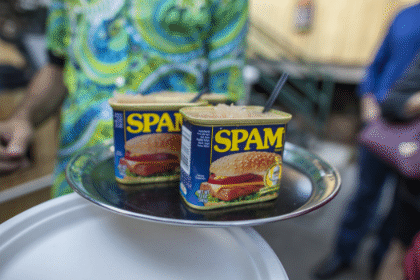
Happy Labor Day! Celebrate it with the perfect email-themed cocktail – a spam-infused Mai Tai, served in the traditional glass.
A speciality of the Duck Inn in Chicago, it’s made from a fat-washed dark rum:
A decade of blogging
- laura
- Aug 31, 2017

August 2017 marks 10 years of blogging. In that time we’ve written almost 2200 posts. We’ve had millions of visitors.
Read MoreMandatory TLS is coming
- steve
- Aug 30, 2017
Well, not exactly mandatory but Chrome will start labeling any text or email form field on a non-TLS page as “NOT SECURE”.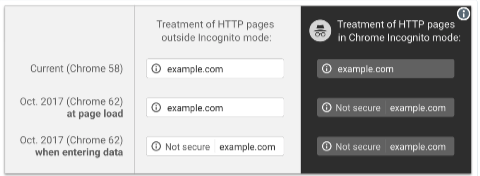
Chrome 62 will be released as stable some time around October 24th. If you want to avoid the customer support overhead then, regardless of whether any of the information on a form is sensitive, you should probably make sure that all your forms are accessible via TLS and redirect any attempt to access them over plain http to https. You can do that globally for a whole site pretty easily, and there’s not really any downside to doing so.
I still have half a dozen sites I need to convert to supporting TLS – the cobbler’s children have no shoes – and I’m beginning to feel a little urgency about it.
There’s more information in Google’s announcement, their checklist of how to set up TLS, and some background at Kaspersky Labs.
Categories
Tags
- 2010
- 2016
- 2fa
- 419
- 4xx
- 554
- 5xx
- @
- Aarp
- Abacus
- Abandoned
- Aboutmyemail
- Abuse
- Abuse Desk
- Abuse Enforcement
- Abuse Prevention
- Academia
- Accreditation
- Acme
- Acquisition
- Address Book
- Addresses
- Administrivia
- Adsp
- Advanced Delivery
- Advertiser
- Advertising
- Advice
- Affiliate
- Affiliates
- After the Email
- Alerts
- Algorithm
- Alice
- Alignment
- Allcaps
- Alt Text
- AMA
- Amazon
- Amp
- Amsterdam
- Analysis
- Anecdotes
- Anti-Spam
- Anti-Spam Laws
- Anti-Spammers
- Antwort
- AOL
- Appeals
- Appearances
- Appending
- Apple
- Arc
- Arf
- Arrest
- Arrests
- Ascii
- Asides
- Ask Laura
- Askwttw
- Assertion
- Assumptions
- ATT
- Attacks
- Attention
- Attrition
- Audit
- Authentication
- Authentication. BT
- Autonomous
- Award
- B2B
- B2C
- Backhoe
- Backscatter
- Backus-Naur Form
- Banks
- Barracuda
- Barry
- Base64
- Base85
- Bcc
- Bcp
- Bear
- Bears
- Behaviour
- Benchmark
- BESS
- Best Practices
- Bgp
- BIMI
- Bit Rot
- Bitly
- Bizanga
- Black Friday
- Blackfriday
- Blacklist
- Blacklists
- Blast
- Blo
- Block
- Blockin
- Blocking
- Blocklist
- Blocklisting
- Blocklists
- Blocks
- Blog
- Blog Links
- Blogroll
- Blogs
- Bob
- Boca
- Bofa
- Book Review
- Bot
- Botnet
- Botnets
- Bots
- Bounce
- Bounce Handling
- Bounces
- Branding
- Brands
- Breach
- Breaches
- Breech
- Bronto
- Browser
- Bsi
- Bucket
- Bulk
- Bulk Folder
- Bulk Mail
- Business
- Business Filters
- Buying Leads
- Buying Lists
- C-28
- CA
- Caa
- Cabbage
- Cache
- Cadence
- CAH
- California
- Campaign
- CAN SPAM
- Canada
- Candy
- Candycandycandy
- Canonicalization
- Canspam
- Captcha
- Career Developmnent
- Careers at WttW
- Cargo Cult
- Case Law
- Cases
- CASL
- Cat
- Cbl
- CDA
- Cert
- Certification
- CFL
- CFWS
- Change
- Charter
- Cheat
- Cheese
- Choicepoint
- Choochoo
- Christmas
- Chrome
- Cidr
- Cisco
- Civil
- Clear.net
- Clearwire.net
- Cli
- Click
- Click Through
- Click Tracking
- Clicks
- Clickthrough
- Client
- Cloudflare
- Cloudmark
- Cname
- Co-Reg
- Co-Registration
- Cocktail
- Code
- COI
- Comcast
- Comments
- Commercial
- Communication
- Community
- Comodo
- Comparison
- Competitor
- Complaint
- Complaint Rates
- Complaints
- Compliancce
- Compliance
- Compromise
- Conference
- Conferences
- Confirmation
- Confirmed (Double) Opt-In
- Confirmed Opt-In
- Congress
- Consent
- Conservatives
- Consistency
- Constant Contact
- Consultants
- Consulting
- Content
- Content Filters
- Contracts
- Cookie
- Cookie Monster
- COPL
- Corporate
- Cost
- Court Ruling
- Cox
- Cox.net
- Cpanel
- Crib
- Crime
- CRM
- Crowdsource
- Crtc
- Cryptography
- CSRIC
- CSS
- Curl
- Customer
- Cyber Monday
- Czar
- Data
- Data Hygiene
- Data Security
- Data Segmentation
- Data Verification
- DBL
- Dbp
- Ddos
- Dea
- Dead Addresses
- Dedicated
- Dedicated IPs
- Defamation
- Deferral
- Definitions
- Delays
- Delisting
- Deliverability
- Deliverability Experts
- Deliverability Improvement
- Deliverability Summit
- Deliverability Week
- Deliverability Week 2024
- Deliverabiltiy
- DeliverabiltyWeek
- Delivery Blog Carnival
- Delivery Discussion
- Delivery Emergency
- Delivery Experts
- Delivery Improvement
- Delivery Lore
- Delivery News
- Delivery Problems
- Dell
- Design
- Desks
- Dhs
- Diagnosis
- Diff
- Dig
- Direct Mag
- Direct Mail
- Directives
- Discounts
- Discovery
- Discussion Question
- Disposable
- Dk
- DKIM
- Dkimcore
- DMA
- DMARC
- DNS
- Dnsbl
- Dnssec
- Docs
- Doingitright
- Domain
- Domain Keys
- Domain Reputation
- DomainKeys
- Domains
- Domains by Proxy
- Dontpanic
- Dot Stuffing
- Dotcom
- Double Opt-In
- Dublin
- Dyn
- Dynamic Email
- E360
- Earthlink
- Ec2
- Ecoa
- Economics
- ECPA
- Edatasource
- Edns0
- Eec
- Efail
- Efax
- Eff
- Election
- Email Address
- Email Addresses
- Email Change of Address
- Email Client
- Email Design
- Email Formats
- Email Marketing
- Email Strategy
- Email Verification
- Emailappenders
- Emailgeeks
- Emails
- Emailstuff
- Emoji
- Emoticon
- Encert
- Encryption
- End User
- Endusers
- Enforcement
- Engagement
- Enhanced Status Code
- Ennui
- Entrust
- Eol
- EOP
- Epsilon
- Esp
- ESPC
- ESPs
- EU
- Ev Ssl
- Evaluating
- Events
- EWL
- Exchange
- Excite
- Expectations
- Experience
- Expires
- Expiring
- False Positives
- FAQ
- Fathers Day
- Fbl
- FBL Microsoft
- FBLs
- Fbox
- FCC
- Fcrdns
- Featured
- Fedex
- Feds
- Feedback
- Feedback Loop
- Feedback Loops
- Fiction
- Filter
- Filter Evasion
- Filtering
- Filterings
- Filters
- Fingerprinting
- Firefox3
- First Amendment
- FISA
- Flag Day
- Forensics
- Format
- Formatting
- Forms
- Forwarding
- Fraud
- Freddy
- Frequency
- Friday
- Friday Spam
- Friendly From
- From
- From Address
- FTC
- Fussp
- Gabbard
- GDPR
- Geoip
- Gevalia
- Gfi
- Git
- Giveaway
- Giving Up
- Global Delivery
- Glossary
- Glyph
- Gmail
- Gmails
- Go
- Godaddy
- Godzilla
- Good Email Practices
- Good Emails in the Wild
- Goodmail
- Google Buzz
- Google Postmaster Tools
- Graphic
- GreenArrow
- Greylisting
- Greymail
- Groupon
- GT&U
- Guarantee
- Guest Post
- Guide
- Habeas
- Hack
- Hacking
- Hacks
- Hall of Shame
- Harassment
- Hard Bounce
- Harvesting
- Harvey
- Hash
- Hashbusters
- Headers
- Heartbleed
- Hearts
- HELO
- Help
- Henet
- Highspeedinternet
- Hijack
- History
- Holiday
- Holidays
- Holomaxx
- Hostdns4u
- Hostile
- Hostname
- Hotmail
- How To
- Howto
- Hrc
- Hsts
- HTML
- HTML Email
- Http
- Huey
- Humanity
- Humor
- Humour
- Hygiene
- Hypertouch
- I18n
- ICANN
- Icloud
- IContact
- Identity
- Idiots
- Idn
- Ietf
- Image Blocking
- Images
- Imap
- Inbox
- Inbox Delivery
- Inboxing
- Index
- India
- Indiegogo
- Industry
- Infection
- Infographic
- Information
- Inky
- Inline
- Innovation
- Insight2015
- Integration
- Internationalization
- Internet
- Intuit
- IP
- IP Address
- Ip Addresses
- IP Repuation
- IP Reputation
- IPhone
- IPO
- IPv4
- IPv6
- Ironport
- Ironport Cisco
- ISIPP
- ISP
- ISPs
- J.D. Falk Award
- Jail
- Jaynes
- JD
- Jobs
- Json
- Junk
- Juno/Netzero/UOL
- Key Rotation
- Keybase
- Keynote
- Kickstarter
- Kraft
- Laposte
- Lavabit
- Law
- Laws
- Lawsuit
- Lawsuits
- Lawyer
- Layout
- Lead Gen
- Leak
- Leaking
- Leaks
- Legal
- Legality
- Legitimate Email Marketer
- Letsencrypt
- Letstalk
- Linked In
- Links
- List Hygiene
- List Management
- List Purchases
- List the World
- List Usage
- List-Unsubscribe
- Listing
- Listmus
- Lists
- Litmus
- Live
- Livingsocial
- London
- Lookup
- Lorem Ipsum
- Lycos
- Lyris
- M3AAWG
- Maawg
- MAAWG2007
- Maawg2008
- MAAWG2012
- MAAWGSF
- Machine Learning
- Magill
- Magilla
- Mail Chimp
- Mail Client
- MAIL FROM
- Mail Privacy Protection
- Mail Problems
- Mail.app
- Mail.ru
- Mailboxes
- Mailchimp
- Mailgun
- Mailing Lists
- Mailman
- Mailop
- Mainsleaze
- Maitai
- Malicious
- Malicious Mail
- Malware
- Mandrill
- Maps
- Marketer
- Marketers
- Marketing
- Marketo
- Markters
- Maths
- Mcafee
- Mccain
- Me@privacy.net
- Measurements
- Media
- Meh
- Meltdown
- Meme
- Mentor
- Merry
- Message-ID
- Messagelabs
- MessageSystems
- Meta
- Metric
- Metrics
- Micdrop
- Microsoft
- Milter
- Mime
- Minimal
- Minshare
- Minute
- Mit
- Mitm
- Mobile
- Models
- Monitoring
- Monkey
- Monthly Review
- Mpp
- MSN/Hotmail
- MSN/Hotmail
- MTA
- Mua
- Mutt
- Mx
- Myths
- Myvzw
- Needs Work
- Netcat
- Netsol
- Netsuite
- Network
- Networking
- New Year
- News
- News Articles
- Nhi
- NJABL
- Now Hiring
- NTP
- Nxdomain
- Oath
- Obituary
- Office 365
- Office365
- One-Click
- Only Influencers
- Oops
- Opaque Cookie
- Open
- Open Detection
- Open Rate
- Open Rates
- Open Relay
- Open Tracking
- Opendkim
- Opens
- Openssl
- Opt-In
- Opt-Out
- Optonline
- Oracle
- Outage
- Outages
- Outblaze
- Outlook
- Outlook.com
- Outrage
- Outreach
- Outsource
- Ownership
- Owning the Channel
- P=reject
- Pacer
- Pander
- Panel
- Password
- Patent
- Paypal
- PBL
- Penkava
- Permission
- Personalities
- Personalization
- Personalized
- Pgp
- Phi
- Philosophy
- Phish
- Phishers
- Phishing
- Phising
- Photos
- Pii
- PIPA
- PivotalVeracity
- Pix
- Pluscachange
- Podcast
- Policies
- Policy
- Political Mail
- Political Spam
- Politics
- Porn
- Port25 Blocking
- Postfix
- Postmaster
- Power MTA
- Practices
- Predictions
- Preferences
- Prefetch
- Preview
- Primers
- Privacy
- Privacy Policy
- Privacy Protection
- Private Relay
- Productive Mail
- Promotions
- Promotions Tab
- Proofpoint
- Prospect
- Prospecting
- Protocols
- Proxy
- Psa
- PTR
- Public Suffix List
- Purchased
- Purchased Lists
- Purchases
- Purchasing Lists
- Questions
- Quoted Printable
- Rakuten
- Ralsky
- Rant
- Rate Limiting
- Ray Tomlinson
- Rc4
- RDNS
- Re-Engagement
- Read
- Ready to Post
- Readytopost
- Real People
- Realtime Address Verification
- Recaptcha
- Received
- Receivers
- Recipient
- Recipients
- Redirect
- Redsnapper
- Reference
- Registrar
- Registration
- Rejection
- Rejections
- Rejective
- Relationship
- Relevance
- Relevancy
- Removals
- Render Rate
- Rendering
- Replay
- Repost
- Repudiation
- Reputation
- Requirements
- Research
- Resources
- Responsive
- Responsive Design
- Responsys
- Retail
- Retired Domains
- Retro
- Return Path
- Return Path Certified
- ReturnPath
- Reunion.com
- Reverse Dns
- RFC
- RFC2047
- RFC2821/2822
- RFC5321/5322
- RFC5322
- RFC8058
- RFC821/822
- RFCs
- Roadr
- RoadRunner
- Rodney Joffe
- ROKSO
- Role Accounts
- Rollout
- RPost
- RPZ
- Rule 34
- Rules
- Rum
- Rustock
- S.1618
- SaaS
- Sales
- Salesforce
- Sass
- SBCGlobal
- Sbl
- Scam
- Scammers
- Scams
- Scanning
- Scraping
- Screamer
- Screening
- Script
- Sec
- Secure
- Security
- Segmentation
- Selligent
- Send
- Sender
- Sender Score
- Sender Score Certified
- Senderbase
- Senderid
- Senders
- Senderscore
- Sendgrid
- Sending
- Sendy
- Seo
- Service
- Services
- Ses
- Seth Godin
- SFDC
- SFMAAWG2009
- SFMAAWG2010
- SFMAAWG2014
- Shared
- Shell
- Shouting
- Shovel
- Signing
- Signups
- Silly
- Single Opt-In
- Slack
- Slicing
- Smarthost
- Smiley
- Smime
- SMS
- SMTP
- Snds
- Snowshoe
- Soa
- Socia
- Social Media
- Social Networking
- Soft Bounce
- Software
- Sony
- SOPA
- Sorbs
- Spam
- Spam Blocking
- Spam Definition
- Spam Filtering
- Spam Filters
- Spam Folder
- Spam Law
- Spam Laws
- Spam Reports
- Spam Traps
- Spam. IMessage
- Spamarrest
- Spamassassin
- Spamblocking
- Spamcannibal
- Spamcon
- Spamcop
- Spamfiltering
- Spamfilters
- Spamfolder
- Spamhaus
- Spamhause
- Spammer
- Spammers
- Spammest
- Spamming
- Spamneverstops
- Spamresource
- Spamtrap
- Spamtraps
- Spamza
- Sparkpost
- Speaking
- Special Offers
- Spectre
- SPF
- Spoofing
- SproutDNS
- Ssl
- Standards
- Stanford
- Starttls
- Startup
- State Spam Laws
- Statistics
- Storm
- Strategy
- Stripo
- Stunt
- Subject
- Subject Lines
- Subscribe
- Subscriber
- Subscribers
- Subscription
- Subscription Process
- Success Stories
- Suing
- Suppression
- Surbl
- Sureclick
- Suretymail
- Survey
- Swaks
- Syle
- Symantec
- Tabbed Inbox
- Tabs
- Tagged
- Tagging
- Target
- Targeting
- Techincal
- Technical
- Telnet
- Template
- Tempo
- Temporary
- Temporary Failures
- Terminology
- Testing
- Text
- Thanks
- This Is Spam
- Throttling
- Time
- Timely
- TINS
- TLD
- Tlp
- TLS
- TMIE
- Tmobile
- Too Much Mail
- Tool
- Tools
- Toomuchemail
- Tor
- Trademark
- Traffic Light Protocol
- Tragedy of the Commons
- Transactional
- Transition
- Transparency
- Traps
- Travel
- Trend/MAPS
- Trend Micro
- Trend/MAPS
- Trigger
- Triggered
- Troubleshooting
- Trustedsource
- TWSD
- Txt
- Types of Email
- Typo
- Uce
- UCEprotect
- Unblocking
- Uncategorized
- Undisclosed Recipients
- Unexpected Email
- Unicode
- Unroll.me
- Unsolicited
- Unsubcribe
- Unsubscribe
- Unsubscribed
- Unsubscribes
- Unsubscribing
- Unsubscription
- Unwanted
- URIBL
- Url
- Url Shorteners
- Usenet
- User Education
- Utf8
- Valentine's Day
- Validation
- Validity
- Value
- Valueclick
- Verification
- Verizon
- Verizon Media
- VERP
- Verticalresponse
- Vetting
- Via
- Video
- Violence
- Virginia
- Virtumundo
- Virus
- Viruses
- Vmc
- Vocabulary
- Vodafone
- Volume
- Vzbv
- Wanted Mail
- Warmup
- Weasel
- Webinar
- Webmail
- Weekend Effect
- Welcome Emails
- White Space
- Whitelisting
- Whois
- Wiki
- Wildcard
- Wireless
- Wiretapping
- Wisewednesday
- Women of Email
- Woof
- Woot
- Wow
- Wtf
- Wttw in the Wild
- Xbl
- Xfinity
- Xkcd
- Yahoo
- Yahoogle
- Yogurt
- Zoidberg
- Zombie
- Zombies
- Zoominfo
- Zurb