When opens hurt reputation
- laura
- January 30, 2020
- Delivery improvement
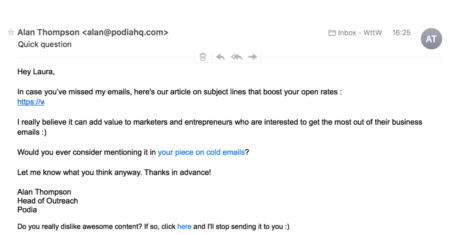
Podia has scraped the Word to the Wise blog and I’m currently receiving an ongoing drip campaign from them absolutely begging me to mention them in my blog post on cold emails.
Related Posts
July 2017: The month in email
- laura
- Aug 7, 2017
August is here, and as usual, we’re discussing spam, permissions, bots, filters, delivery challenges, and best practices.
One of the things we see over and over again, both with marketers and with companies that send us email, is that permission is rarely binary — companies want a fair amount of wiggle room, or “implied permission” to send. There are plenty of examples of how companies try to dance around clear permissions, such as this opt form from a company we used to do business with. But there are lots of questions here: can you legitimately mail to addresses you haven’t interacted with in 5 years? 10 years? What’s the best way to re-engage, if at all?
We frequently get questions about how to address deliverability challenges, and I wrote up a post about some of the steps we take as we help our clients with this. These are short-term fixes; for long-term success, the most effective strategy is sending email that people want and expect. Engagement is always at the core of a sustainable email program.
We’ve also discussed the rise of B2B spam, and the ways in which marketing technologies contribute to the problem. B2B marketers struggle to use social and email channels appropriately to reach customers and prospects, but still need to be thoughtful about how they do it. I also wrote about some of the ways that marketing automation plugins facilitate spam and how companies should step up to address the problem. Here’s an example of what happens when the automation plugins go awry.
I wrote a few posts about domain management and the implications for security and fraud. The first was about how cousin domain names can set users up for phishing and fraud, and the second was a useful checklist for looking at your company’s domain management. We also looked at abuse across online communities, which is an increasing problem and one we’re very committed to fighting.
I also highlighted a few best practices this month: guidelines for choosing a new ESP and active buttons in the subject line for Gmail.
And finally, we celebrated the 80th birthday of the original SPAM. If you’re a regular reader of this blog, you probably already know why unwanted email is called SPAM, but just in case, here’s a refresher….
Poor delivery at Gmail but no where else
- laura
- Dec 21, 2016
I’ve mentioned before that I can often tell what ISP is making filter changes by what my calls are about. The last few weeks it’s been Gmail where folks are struggling to get to the inbox. One of the things most clients and potential clients have mentioned is that they’re not having any problems at the other major ISPs.
Read MoreInsight into Gmail filtering
- laura
- Apr 12, 2016
Last week I posted a link to an article discussing how Gmail builds defenses to protect their users from malicious mail. One of the things I found very interesting in that article was the discussion about how Gmail deploys many changes at once, to prevent people from figuring out what the change was.
Let’s take a look at what Gmail said.